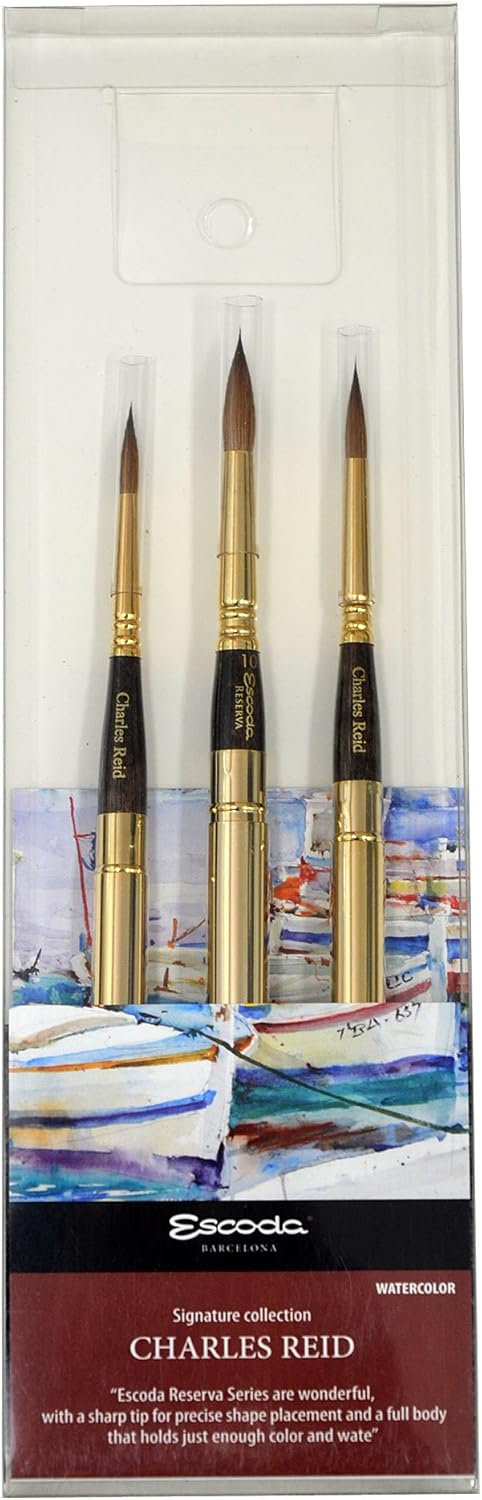
Which brush size will help you paint convincing skies, distant trees, and textured foregrounds in your acrylic landscapes?
What Size Paint Brush For Acrylic Landscapes
You want practical guidance so you can choose brushes that suit the scale and style of your acrylic landscapes. This section introduces the main question—what size paint brush for acrylic landscapes—and sets the stage for detailed, actionable recommendations.
Why brush size matters for acrylic landscapes
Brush size determines how much paint you can lay down, how quickly you can cover an area, and how precise your marks will be. Choosing the right size helps you control texture, stroke quality, and the overall rhythm of your composition.
The difference between brush size and brush shape
Size and shape are separate but equally important decisions. Size dictates coverage and scale, while shape governs the type of mark you can make—for example, broad flats for sky washes or small rounds for fine branches.
Understanding brush size numbering and what it means for you
You may notice numbers like 0, 2, 8, 12, 24 on brush handles and wonder what they mean. These numbers are relative indicators of the brush head diameter, but there’s no strict industry standard, so you’ll learn to judge them by feel and sight as well.
How brush numbers translate to actual width
A higher number generally means a wider brush, but the measurement varies by manufacturer. For practical purposes, think of numbers as small/medium/large ranges rather than precise millimeters.
Short-hand rule for choosing numbers by canvas size
If you’re working on small canvases (5×7 to 8×10), favor sizes 0–6. For medium canvases (9×12 to 16×20), include sizes 6–12. For large canvases (18×24 and up), keep brushes in the 12–30 range. These ranges give you the starting point you need to match brush scale to canvas size.
Brush shapes and where you’ll use each one
Shape often matters more than number for specific landscape tasks. You’ll find flat, filbert, round, fan, angular, and mop brushes most useful, and each has clear advantages for different landscape elements.
Flat brushes: broad strokes and crisp edges
Flat brushes have a square end that’s great for covering large areas and creating sharp edges. You’ll use flats for skies, large color blocks, and pushing paint across the surface quickly.
Filbert brushes: versatile middle ground
Filberts have rounded edges that combine the coverage of a flat with the point of a round. These are excellent for soft foliage, blended edges, and sculpted marks you might use for trees and distant hills.
Round brushes: detail and controlled lines
Rounds taper to a point and are your go-to for detail work, thin branches, and controlled strokes. They work well for final highlights, tiny grasses, and delicate texture in the foreground.
Fan brushes: texture and blending
Fan brushes spread bristles in a fan shape and are ideal for foliage texture, soft blending, and feathered edges in clouds or reflections. They’re great when you need repeated, organic marks.
Angle/Angular brushes: direction and shape
Angle brushes have an angled edge that helps you paint hard-to-reach corners and create directional strokes. You’ll use them for slanted grass, building shapes, or any area where you need a controlled diagonal stroke.
Mop and wash brushes: large, soft coverage
Mop brushes or large rounds are perfect for wetting the canvas, laying broad washes, and blending big sky gradients. They’re soft and hold a lot of diluted paint for smooth transitions.
Synthetic vs natural bristles: which is best for acrylic landscapes
Acrylic paint dries faster and contains polymers that can be harsh on delicate natural hairs. Choosing the right bristle type influences spring, durability, and performance.
Synthetic brushes: durability and versatility
Most artists prefer synthetic brushes (Taklon or other synthetic blends) for acrylics because they resist damage from acrylic polymers. They provide consistent spring and are easier to clean when paint begins to dry.
Natural hair brushes: when to use them
Natural hairs like hog bristle are valuable for heavy-body acrylics when you want stiff, textured marks and impasto. Natural sable is typically reserved for watercolor and oil; it’s less practical for heavy acrylic use.
Mixed bristle brushes: best of both worlds
Blended brushes combine synthetic and natural hairs to give both softness and stiffness. They can be good general-purpose brushes for acrylic landscapes where you need both finesse and texture.
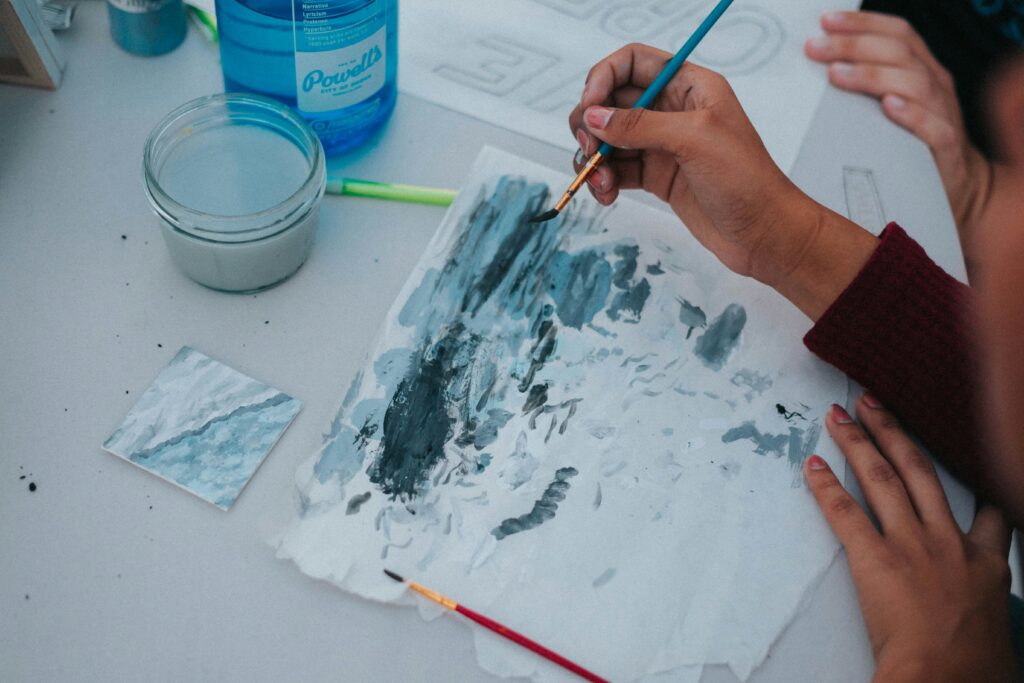
Choosing brushes by landscape element
Breaking down your landscape into elements helps you select the right brush size and shape for each task. Match the brush to the mark you want to create rather than choosing by number alone.
Painting skies and large backgrounds
Skies require smooth gradients and large coverage. Use large flats (sizes 12–30) or mops to lay down washes and create horizontal strokes. For soft clouds, blend with a large filbert or soft flat.
Painting distant hills and mountains
Distant forms need simplified shapes and soft edges. Medium flats and filberts (sizes 6–14) work well to block in mass and create softer profiles. Lower contrast and smaller detail help push these shapes back in space.
Painting mid-ground trees and shrubs
For mid-ground vegetation you’ll combine texture and definition. Use filberts and flats (sizes 6–12) to create leaf masses and branches. Add some fan brush or small rounds for suggestive detail that reads at normal viewing distance.
Painting foreground details and textures
Foreground elements need higher detail and more deliberate textures to hold the viewer’s gaze. Use rounds and smaller filberts (sizes 0–6) to render grasses, rocks, and highlights. You’ll want at least one stiff bristle brush for scraping and dry-brushing texture.
Painting water and reflections
Flat brushes and soft filberts (sizes 8–18) help you achieve smooth horizontal strokes for water surfaces. Use a fan or soft filbert for reflections, and small rounds for ripples and highlights.
Painting rocks and textured ground
For fractured textures and rough surfaces, use stiff hog bristle or stiff synthetic filberts and flats (sizes 6–14). Dry-brushing and scumbling are effective techniques here, so stiffer brushes give you more control.
Practical brush-size guide by canvas dimension
This table gives a quick reference so you can assemble a practical brush set tailored to your canvas size. Use these as starting points and adjust based on your painting style.
| Canvas Size Range | Recommended Brush Shapes | Recommended Sizes (Numbers) |
|---|---|---|
| 5×7 to 8×10 (small) | Round, small Filbert, small Flat | 0, 1, 2, 4, 6 |
| 9×12 to 11×14 (small-medium) | Round, Filbert, Flat, Fan | 2, 4, 6, 8, 10 |
| 12×16 to 16×20 (medium) | Filbert, Flat, Fan, Round, Mop | 6, 8, 10, 12, 14 |
| 18×24 to 24×36 (large) | Large Flats, Mop, Filbert, Large Round | 12, 16, 18, 24, 30 |
| Mural or very large | Large Wash/Mop, wide Flats | 30 and upward, custom wide brushes |
How to adapt these sizes to your technique
If you favor loose, impressionist strokes, err larger in the size ranges. If you prefer tight realism, skew smaller and include more rounds and small filberts. Your personal stroke size and painting speed will guide these adjustments.
Suggested brush kit for different skill levels
Rather than buying dozens of brushes, certain kits give the most utility for acrylic landscapes. Below are recommended kits by skill level.
Beginner kit (minimal, efficient)
Get one large flat (size 12), one medium filbert (size 8), two rounds (sizes 2 and 6), and one fan brush (size medium). This limited set lets you handle most landscape tasks while you learn how each shape performs.
Intermediate kit (more control and versatility)
Add a mop or wash brush, a stiff hog bristle flat for texture, extra filberts in sizes 4 and 12, and a few smaller rounds (0–4). This kit gives better control for mid-ground and foreground work.
Advanced kit (full flexibility)
Include a range of flats (6, 12, 18), filberts (4, 8, 14), rounds (0, 2, 6, 10), fan, angle, and a large mop. Add a couple of specialty stiff bristle brushes for impasto and a soft synthetic for glazing and blending.
Techniques that inform your brush choices
Different painting techniques demand different brush characteristics. Identify the techniques you use most often and select brushes that support them.
Scumbling and dry-brushing
For scumbling you need stiff brushes that hold little paint and can scratch or scrub the surface. Hog bristle or stiff synthetic flats and filberts in medium sizes are ideal.
Wet-on-wet and glazing
Although acrylics dry quickly, you can use retarders or stay-wet palettes for wet-on-wet blending. Soft synthetic flats and mops let you glide paint smoothly for glazing and subtle mixing.
Impasto and palette work
For thick, sculptural paint, use stiff hog bristle brushes or wide flats that can push and sculpt heavy gel or heavy body paint. These brushes need strong ferrules and robust handles.
Stippling and leaf effects
Fan brushes, short-stemmed stiff filberts, and small rounds are excellent for stippling foliage and leaf textures. A fan brush can make quick suggestions of leaf clusters with minimal effort.

Table of landscape elements and recommended brush selection
This table gives you a quick, element-by-element breakdown you can reference while painting.
| Landscape Element | Brush Shape(s) | Size Range | Bristle Type | Technique Tips |
|---|---|---|---|---|
| Sky washes | Mop, large Flat | 12–30 | Soft synthetic | Work horizontally; use retarder to prolong blending time |
| Clouds | Filbert, soft Flat, Fan | 8–16 | Soft synthetic | Build from light to dark; soften edges with clean, damp brush |
| Distant hills | Flat, Filbert | 6–14 | Synthetic or soft hog blend | Keep contrast low; push edges slightly to suggest atmosphere |
| Mid-ground trees | Filbert, Fan, Round | 6–12 | Synthetic or mixed | Use layered stippling for leaves; darker accents later |
| Foreground grasses | Round, Angle, Small Flat | 0–6 | Synthetic or hog | Use varying pressures and flicks for realistic blades |
| Water/reflections | Flat, Filbert, Fan | 8–18 | Soft synthetic | Horizontal strokes; pull reflections with a clean soft brush |
| Rocks/textures | Stiff Flat, Filbert | 6–14 | Hog or stiff synthetic | Use scraping and dry-brush; add highlights with small round |
| Fine branches/highlights | Round | 0–2 | Synthetic | Thin, controlled lines; keep paint consistency right for clean edges |
Buying tips: what to look for in a brush
When you choose brushes, inspect build quality and handle style. A good brush is an investment that saves frustration and improves your painting results.
Ferrule quality and handle length
Look for secure ferrules (the metal band) that aren’t loose and won’t allow bristles to shed. Handle length matters—long handles are best for easel work and reaching across larger canvases, while short handles suit tabletop work.
Bristle retention and spring
A brush should return to shape (spring) after a stroke. Test it by flexing the bristles lightly to see if they snap back. Poor spring means less control and a muddier mark.
Synthetic fiber options
Taklon-style bristles are common and inexpensive, offering smooth handling and compatibility with acrylics. Some modern synthetic filaments mimic natural hair behavior and are excellent for both smooth blends and textured strokes.

Caring for brushes when you paint with acrylics
Acrylic dries quickly and can ruin brushes if left to harden. Proper cleaning and storage will extend the life of your brushes significantly.
Cleaning immediately after use
You should rinse brushes right away with water, then use mild soap to remove any remaining paint. If acrylic begins to dry on bristles, soak overnight in brush cleaner and then gently work the bristles.
Using brush cleaners and conditioners
Occasional use of a dedicated brush soap or conditioner helps keep bristles flexible. Avoid harsh solvents; warm water, soap, and gentle manipulations are usually enough.
Storing brushes correctly
Store brushes bristle-side up or flat, never resting on their tips. Keep them away from direct heat and sunlight, and reshape the bristles before drying to prevent splaying.
Extending paint drying time for better blending
Acrylics’ fast drying time can challenge blending for landscapes. You can still achieve smooth transitions with a few simple strategies.
Use retarders and open mediums
Add a retarder medium or an open acrylic medium to your paint to extend working time. Use these sparingly to avoid weakening the paint film or altering color.
Stay-wet palettes and misting
A stay-wet palette or misting bottle helps keep paints moist and workable. Keeping paint moist on the palette is as important as slowing surface drying on the canvas.
Work in sections and layer strategically
Block in large value shapes first and refine details after smaller areas have dried. This allows you to use wet-on-wet for small areas while layering for depth elsewhere.
Common mistakes and how to avoid them
Knowing common pitfalls helps you pick the correct brush sizes and avoid frustration. Most mistakes are fixable with a few simple corrections.
Using too-small brushes for large areas
If you’re trying to cover a big sky with a tiny brush, you’ll fatigue and create streaky marks. Swap to a large flat or mop to get even coverage faster and with cleaner strokes.
Neglecting brush maintenance
Leaving acrylic to dry on bristles ruins their spring and shape. clean brushes immediately and replace when performance drops beyond repair.
Overloading the brush with paint
Too much paint on a small brush creates blobs and loses control. Load the brush moderately and build up layers instead of trying to lay down too much at once.
Budgeting: how many brushes do you really need?
You don’t need a huge collection to paint landscapes well. A smart, curated selection beats a closet full of redundant brushes.
Building incrementally
Start with the beginner kit listed earlier and add brushes based on what you find missing. Pay attention to techniques you enjoy and buy brushes that support them.
When to invest in specialty brushes
Invest in quality for brushes you use every day—mops, filberts, and flats. Less-used specialty brushes (very small rounds or large custom wash brushes) can be mid-range rather than premium.
Final checklist for choosing brushes for acrylic landscapes
Before you buy, run through this quick checklist so your purchases match your goals and workflow.
- Match brush size to canvas scale and subject detail.
- Choose shapes based on typical marks you make (flats for coverage, filberts for blending, rounds for detail).
- Prefer synthetic or mixed bristles for acrylic durability.
- Keep a range: large flat or mop, a couple of filberts, rounds in small and medium sizes, fan and a stiff flat.
- Clean immediately and condition occasionally.
Closing practical tip
If you only buy one additional brush after your beginner set, get a medium filbert (size 8–12). It combines coverage and versatility and will dramatically increase your options when painting landscapes.
If you follow these guidelines for what size paint brush for acrylic landscapes, you’ll feel more confident selecting tools that match your canvas size, technique, and painting goals. Your brush choices will help you translate observation into brushwork that communicates scale, depth, and atmosphere effectively.