Have you ever wondered which brush will give your painting the best results — synthetic or natural?
Difference Between Synthetic And Natural Paint Brushes
You’re about to get a thorough, friendly guide that lays out how synthetic and natural paint brushes differ, how they behave with different paints, and how to choose and care for them so your work looks its best. You’ll find practical comparisons, cleaning tips, and buying advice to make confident choices for your projects.
What this article covers and why it matters to you
You’ll learn how construction, fiber properties, and maintenance affect performance. Understanding these differences will help you pick the right tool for the job, save money, and improve your technique whether you paint with oil, acrylic, watercolor, or mixed media.
Basic definitions: What are synthetic and natural brushes?
You’ll want to start with clear definitions so you can compare apples to apples.
Natural brushes
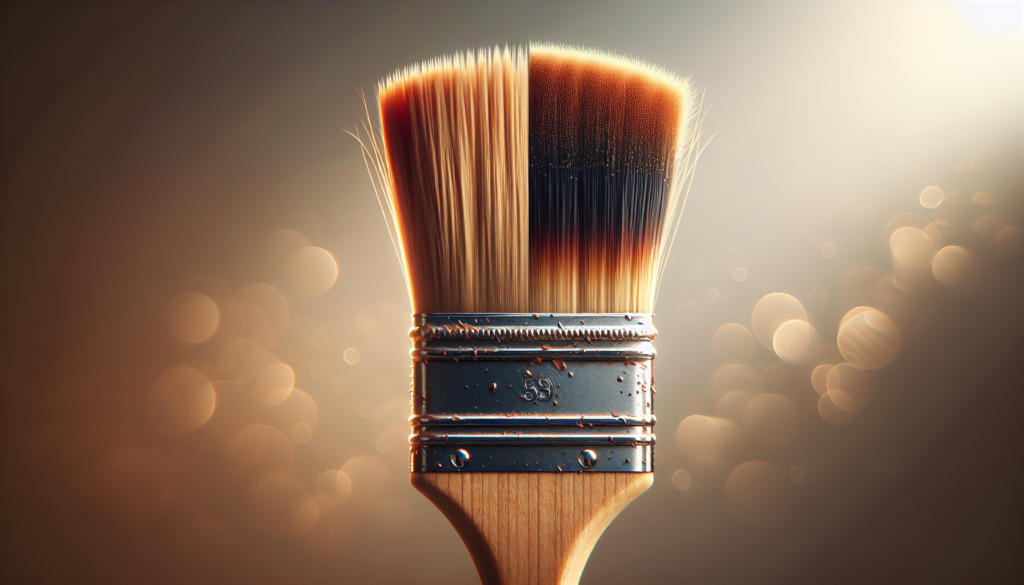
Natural brushes use hairs sourced from animals — commonly sable, red sable blends, hog (boar), mongoose, goat, and squirrel. Natural hair tends to be springy, taper well, and hold liquid differently based on fiber structure. You’ll often see them preferred for watercolor and fine oil work.
Synthetic brushes
Synthetic brushes are made from man-made fibers such as nylon, polyester, or Taklon (a trademarked nylon). They’re produced to mimic certain qualities of natural hair or to provide characteristics distinct from animal hair, like stiffness or chemical resistance. You’ll frequently use them for acrylics and for situations where durability and cost-effectiveness matter.
How brushes are constructed
Knowing how brushes are built helps you understand performance and price differences.
Ferrule, handle, and hair
Every brush has three main parts: the handle (wood or plastic), the ferrule (metal band), and the hair or filament bundle. You’ll notice that ferrule fit and glue quality affect longevity. A secure ferrule keeps hairs from shedding and helps maintain shape.
Tip shape and taper
Tip shape and taper are created by how hairs are cut and assembled. Natural hairs often form very fine tapered points, which influences precision. Synthetics may be shaped to a point but can behave differently because of fiber stiffness and memory.
Physical properties that affect painting
Here are the key attributes where synthetic and natural brushes typically differ, and how that impacts your painting.
Absorbency and water retention
Natural hair generally holds more liquid, especially soft hairs like sable and squirrel. This makes them well-suited for washes and glazing where you want continuous wet application. Synthetics hold less water but release it more evenly in many modern formulations, which is helpful with fast-drying acrylics.
Spring, snap, and flexibility
Spring (how the brush returns to shape) and snap (how it releases paint) are crucial for controlled strokes. Natural sable commonly provides excellent spring and a soft flex that gives graceful strokes. Synthetic brushes can be engineered for firm or soft spring depending on fiber type and manufacturing, so you’ll find a range from rigid to quite springy.
Durability and resistance to chemicals
Synthetic fibers resist harsh solvents and repeated cleaning better than many natural hairs. If you work with strong solvents or clean brushes often, synthetics tend to last longer. Natural hair can degrade with solvent exposure and rough cleaning.
Taper and point retention
Natural hairs often form very slender tapers that create fine points and delicate strokes. Some high-quality synthetics mimic this well; others, especially stiffer nylon variants, retain a broader tip that’s better for bold marks but less suited to ultra-fine detail.
Performance with different types of paint
The paint medium you use changes which brush type will serve you best. Here’s how both brush types generally perform with common mediums.
Watercolor
You’ll find natural sable and squirrel brushes excel in watercolor because they can hold large amounts of water and pigment, allowing long, smooth washes and controlled gradations. Synthetics have improved tremendously and are excellent for student practice, lifting, and scenarios where you need a resilient brush that won’t tip as easily.
Acrylic
Acrylics dry quickly and can be abrasive. Synthetic brushes are generally preferred because they stand up to acrylic polymers and frequent cleaning. They retain shape and snap under the heavier body of acrylic paint. You can use natural hair for acrylics, but you’ll need to clean quickly and carefully and accept faster wear.
Oil
For oils, you can successfully use either type. Natural hog bristle is a traditional choice for heavy-bodied oil work because of its stiffness and ability to move thick paint. Natural sable or red sable can be used for glazing and fine detail. Synthetics engineered for oils offer good alternatives, especially for mixed media or if you prefer easier maintenance.
Gouache and Tempera
Synthetics are typically more practical for gouache and tempera because these mediums are water-based and require frequent cleaning; synthetics resist water swell and retain shape. Natural hair works too, particularly for subtle blending, but may require more care.
Shapes, sizes, and hair type interactions
Choosing brush shape is as important as choosing hair type. Here’s how hair type interacts with common shapes.
Flats and filberts
Flats move a lot of paint; hog and stiff synthetics are great for bold marks and blocking in color. Filberts, with their rounded edge, benefit from softer natural hair when blending is important.
Rounds and liners
For precise lines, you’ll want hair that forms a good point. Natural sable is the classic choice for rounds and liners, but high-quality synthetics can offer comparable point retention at a lower price.
Mop and wash brushes
These need water capacity. Squirrel and large sable mop brushes are favored for watercolor washes. Synthetics can work but often require larger sizes to match the water-holding capacity.
Synthetic blends: the middle ground
Many brushes are blends of natural and synthetic hairs. You’ll find these combine desirable qualities like the liquid-holding capacity of natural hair with the durability and affordability of synthetics. Blends are often the best practical choice for artists who want balance.
Environmental and ethical considerations
You may care about animal welfare or environmental impact. Natural hair brushes use animal-derived materials; sourcing and manufacturer transparency vary. Synthetic brushes avoid animal use but are produced from petrochemicals and may be less biodegradable. Consider brands that disclose sourcing or use recycled materials, and weigh longevity versus disposability when calculating environmental impact.
Cost and value
Price is an important factor when you buy tools. You’ll usually see this pattern:
- Natural high-end (sable): high cost, excellent performance for watercolors and fine detail
- Natural inexpensive (hog): moderate cost, great for oils and heavy-bodied application
- Synthetic: wide price range, excellent value, especially for beginners and acrylic work
- Blends: mid-tier cost with balanced performance
Long-term value depends on how often you paint, the mediums you use, and how well you take care of brushes.
Care and cleaning: extend the life of your brushes
How you clean and store brushes has a huge impact on their lifespan, regardless of hair type. The following table summarizes cleaning approaches for different brush types and paints.
| Paint type | Recommended cleaning steps | Notes for natural hair | Notes for synthetic |
|---|---|---|---|
| Watercolor, gouache | Rinse in lukewarm water until clean, gently reshape tip, dry flat or handle-up | Use mild soap occasionally for pigment removal; avoid hot water | Generally easier to clean; low risk of swelling |
| Acrylic | Wipe excess, rinse immediately in water, mild soap to remove film, work out paint from ferrule, reshape | Clean promptly; natural hair may hold acrylic filaments and degrade | Synthetic resists acrylic film; still clean quickly |
| Oil | Wipe with solvent (odorless mineral spirits), then wash with soap and water, reshape, dry | Avoid long solvent soaking; natural hair can be weakened | Synthetic tolerates solvents better, but avoid harsh prolonged exposure |
| General storage | Keep handles dry, don’t store standing on bristles, use protectors for tips | Natural hair sensitive to humidity; maintain shape | Synthetics handle storage better but still protect tips |
Soap choices and techniques
You’ll want a gentle brush soap or mild dish soap. For oils, use an odorless mineral spirit for initial cleaning, then soap and water. Work paint out gently using the base of your palm rather than pulling against the ferrule. Always reshape the tip and let brushes dry horizontally or handle-up to avoid water entering the ferrule.
Avoiding common mistakes
- Don’t leave brushes soaking for long periods — this loosens glue in the ferrule.
- Don’t use hot water; it can lift glue and damage hair.
- Don’t bend or store brushes on their tips — this deforms the point.
How to choose the right brush for your project
Choosing depends on medium, technique, and budget. Use this quick reference table to match your needs.
| Your priority | Best brush type(s) |
|---|---|
| Fine watercolor detail | Natural sable or high-quality synthetic sable imitation |
| Large watercolor washes | Squirrel or large sable mop; large synthetic for budget |
| Acrylic painting | Synthetic nylon/polyester; synthetic filberts and flats |
| Thick oil impasto | Hog bristle or stiff synthetics |
| Glazing and fine oil work | Natural sable or sable/synthetic blends |
| Longevity and frequent cleaning | High-quality synthetics |
| Ethical/animal-free | Synthetic only |
Buying incremental sets vs singles
If you’re starting, a small set of synthetic brushes with a couple of natural or blended brushes for specific tasks gives flexibility. If you focus on a particular medium (e.g., watercolor), investing in a couple of high-quality natural hair brushes may pay off.
Troubleshooting common brush problems
When something goes wrong, you’ll want to fix it quickly.
Shedding
If a brush sheds a little initially, that’s often loose hairs from manufacture. Persistent shedding indicates poor construction or damage. Return poor-quality brushes and avoid applying excessive pressure while painting.
Losing shape
If your brush loses its point, try reshaping while wet, then let it dry correctly. Short-term fix: use a small amount of varnish or brush restorer to help tip retention.
Stiff bristles after acrylic use
If acrylic residue causes bristles to stiffen, soak in warm water and work soap through bristles, repeating until clean. If that fails, the brush may be permanently ruined.
Storage and handling tips
Proper storage keeps performance optimal.
Drying and storage
After cleaning, reshape and dry brushes horizontally or handle-up. Use tip covers for rounds and liners. Avoid putting brushes in tightly packed jars where tips rub together.
Long-term storage
Store in a cool, dry place. For natural hair, avoid extreme humidity. For synthetic, avoid prolonged exposure to direct sunlight which can degrade synthetic fibers.
Specialty brushes and uses
Certain tasks call for specialized brushes.
Rigger and liner brushes
For very fine, continuous lines, natural sable is classic. Long synthetic liners can work well if you need durability.
Fan brushes
Used for texture and blending. You’ll use stiff hog fans for texture in oils and softer synthetics or goat-based fans for blending.
Script and mop brushes
Mop brushes for washes often come in natural hair for maximum water capacity. Script brushes for long uninterrupted lines often benefit from natural hair’s tip hold.
Budgeting and building your brush kit
You don’t need all top-end brushes. Balance cost with frequency of use.
- Start with a good synthetic round and flat, a hog or stiff synthetic for bold marks, and one or two natural or blended brushes for detail.
- Replace inexpensive brushes as they wear out; invest in a couple of high-quality pieces for the techniques you use most.
Ethical and sustainability checkpoints to consider when buying
When you shop, ask yourself:
- Does the brand disclose hair sourcing?
- Are the brushes manufactured with solvent exposure in mind?
- Are there recycled or low-impact synthetic options?
- How long is the product expected to last under normal conditions?
Choosing durable tools reduces waste over time, so a higher upfront cost may be more eco-friendly if the brush lasts much longer.
Repair, recycling, and end-of-life options
When brushes are worn out:
- Use them for texture experiments, underpainting, or varnish/varnish removal tasks.
- Some crafters repurpose old bristles into craft tools.
- Check local recycling for wooden handles or metal ferrules if separated (handling metal/wood recycling varies by area).
Practical tips for maximizing performance while painting
- Match brush stiffness to paint viscosity: stiffer for thick paint, softer for thin washes.
- For fine work, use light pressure and let the brush do the work — over-scrubbing changes the tip.
- Maintain a “cleaning rhythm” during sessions: rinse brushes when switching colors or mediums to prevent build-up.
- Rotate brushes so you don’t overuse any single tool and extend overall kit life.
Quick comparison table of key attributes
| Attribute | Natural Brushes | Synthetic Brushes |
|---|---|---|
| Liquid retention | High (esp. sable/squirrel) | Moderate to low; engineered retention possible |
| Spring/snap | Excellent for sable | Variable — engineered for desired spring |
| Durability with solvents | Lower | Higher |
| Cost | Often higher | Wide range, generally lower |
| Point/taper | Superior natural taper | Good in high-quality synthetics; variable |
| Ethical concerns | Animal-based | Animal-free |
| Best for | Watercolor detail, glazing | Acrylics, frequent cleaning, budget use |
Final thoughts: choosing what’s right for you
You’ll make the best choice when you match brush type to the paint, technique, and how much care you’re willing to give tools. Natural brushes reward gentle use and excel in areas where fluid handling and finesse matter. Synthetic brushes reward frequent cleaning, versatility, and durability. Blended brushes give a practical compromise for many artists.
Frequently asked questions (FAQs)
Which brush type is best for a beginner?
You’ll likely benefit most from a few good synthetic brushes because they’re affordable, durable, and work well for acrylics and general use. Add one or two natural or blended brushes if you plan to focus on watercolor or very fine detail.
Can I use natural brushes with acrylic paints?
Yes, you can, but you’ll need to clean them promptly after each session and avoid leaving acrylic to dry in the bristles. Synthetics tend to be more forgiving with acrylics.
How often should you replace brushes?
With proper care, a good brush can last years. For frequently used student-grade brushes, expect to replace them every few months to a year. High-quality brushes that you maintain well can last many years.
Are synthetic brushes as good as natural ones for detail?
High-quality synthetic brushes can match natural brushes for many detail tasks, though the feel may differ. If absolute maximum point and subtle blending are essential, natural sable still holds an edge.
How should I clean brushes after oil painting?
Remove excess paint with a cloth, then use an odorless mineral spirit or paint thinner to wipe out the remainder. Follow with gentle soap and water, reshape, and dry horizontally or handle-up.
Conclusion
You now have a comprehensive guide to help you choose between synthetic and natural paint brushes. By considering the medium you use, how you paint, and how much maintenance you’ll perform, you’ll pick brushes that improve your technique and enjoyment. With the right selection and care, your brushes become reliable partners that help you create better work with less frustration.


