Have you ever spent time creating a water marble design only to watch it break apart or fail to transfer properly?
Common Water Marbling Mistakes (And How To Fix Them)
Water marbling is a visually striking technique that can yield professional-looking results when done correctly. You will learn the most common mistakes people make, why those problems occur, and clear, practical fixes you can apply immediately.
What this guide covers
This guide breaks water marbling down into clear sections so you can identify and correct errors quickly. You will find step-by-step fixes, troubleshooting tables, and best-practice tips for reliable results.
How water marbling works
Understanding the fundamentals helps you diagnose what went wrong. Water marbling depends on the surface tension differences between the polish and the water, polish viscosity, and prompt manipulation to create patterns before the film collapses.
You will want to think about three main variables: the polish’s ability to spread on water, the timing of your patterning, and the mechanics of transferring the film to a nail or another substrate. Once you understand these variables, many mistakes will make sense.
Essential supplies and why they matter
Your choice of supplies directly affects your success rate. Using the right container size, water type, and polish can prevent many common failures.
Below is a table summarizing standard supplies and what to look for when you purchase them.
| Supply | What to use | Why it matters |
|---|---|---|
| Bowl or cup | Shallow, wide disposable plastic or glass bowl (8–12 cm diameter) | Gives enough surface area for patterning; disposable bowls reduce contamination |
| Water | Room-temperature distilled or filtered water | Minimizes minerals and impurities that affect surface tension and polish spreading |
| Nail polish | Water-marbles-specific or standard polish with good spreading properties | Some polishes are too thick or contain additives that prevent spreading |
| Base and top coat | Thin, non-yellowing formulas | Base coat prevents staining; top coat seals design without smudging |
| Thin tools | Orange wood sticks, fine dotting tools, or skewers | For drawing patterns without disturbing film excessively |
| Tape/latex barrier | Liquid barrier or tape around nails | Speeds cleanup and prevents polish from sticking to skin |
| Toothpicks/q-tips | For clean-up and gentle lifting of debris | Keeps the water surface clean and removes unintended flakes |
Preparing your workspace
You will increase your success rate by setting up a clean, stable workspace. A calm environment with good lighting and a flat surface improves precision and reduces mistakes related to movement.
Lay down disposable paper or cloth to protect surfaces from spills. Keep all tools and polish within arm’s reach so you can move smoothly through each step without rushing.
Preparing nails or substrates
Proper preparation of the nail surface is often overlooked but essential. Clean, dry nails with an even base layer give the polish film something to adhere to, and they reduce the likelihood of lifting or premature chipping.
Remove oils and residue with acetone or isopropyl alcohol, then apply a thin base coat. If you are working on artificial nails or other surfaces, ensure they are fully cleaned and lightly buffed to provide adequate adhesion.
Water and temperature: small changes, big impact
Water quality and temperature are deceptively critical variables. You will find that different tap water conditions and temperatures change how polish behaves on the surface.
Room-temperature distilled water is a safe default. If polish splintering or inconsistent spreading occurs, try slightly warmer water (not hot) to reduce surface tension, and always test one drop first to see how polish disperses.
Choosing the right polish
Not every polish is suitable for marbling. You will need polishes that spread quickly, form thin films, and contain pigments that do not sink or clump.
Test polishes by dripping one drop on the surface of your water. A good candidate will flatten into a thin disc almost immediately. If it beads up or fails to spread, set it aside for another technique.
Basic water marbling technique: a quick walkthrough
You will perform a reliable marbling session by following consistent procedural steps. This short walkthrough provides a reproducible framework you can refine.
- Fill your bowl with room-temperature distilled water.
- Remove the brush excess from polish bottle necks to prevent globs.
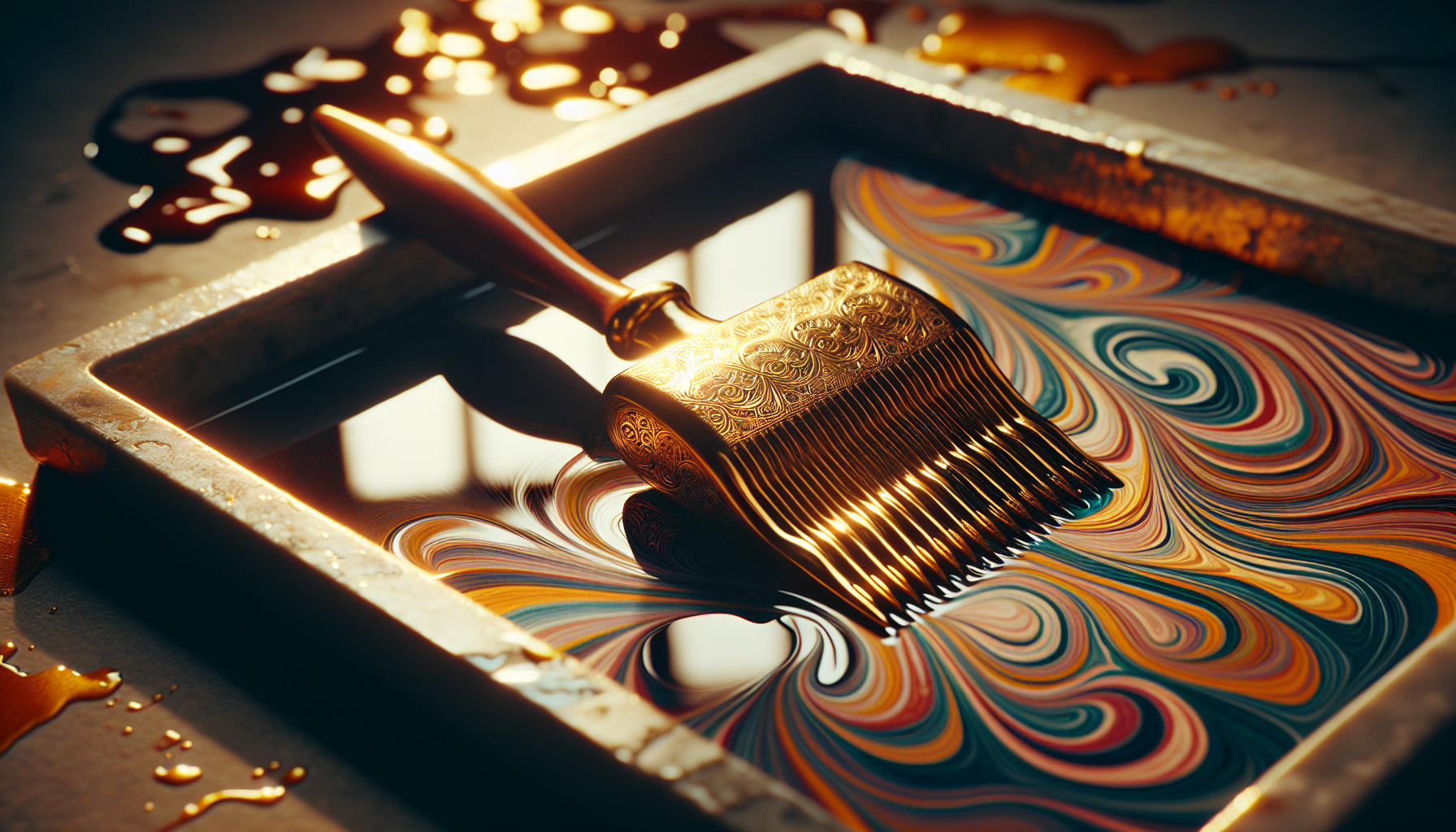
- Drop a single drop of polish in the center of the water; observe spread.
- Add alternate colors quickly in the same center point to form concentric rings.
- Use a fine tool to draw through the rings to create your pattern.
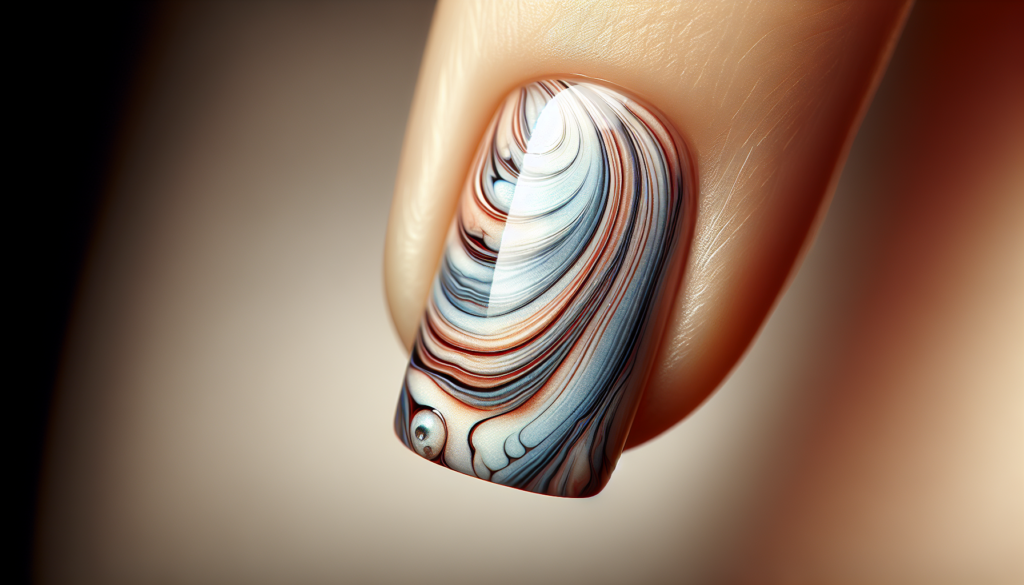
- Insert the nail at a shallow angle and pull out in a steady motion to transfer the film.
- Clean residue around the nail and seal with a top coat.
Common mistakes and how to fix them
Below you will find common problems organized by cause with practical, actionable fixes. Each entry includes a short explanation of why the issue occurs followed by troubleshooting steps you can apply immediately.
1. Polish won’t spread on water
When polish beads up or stays as a drop, it cannot form the film necessary for patterning. This is one of the most frequent frustrations for beginners.
How to fix it:
- Use distilled water rather than tap water to eliminate mineral interference.
- Test different polishes; some brands or finishes include ingredients that prevent spreading.
- Add a warmer temperature to the water (not hot) to reduce surface tension slightly.
- Try adding a single drop of conditioner-free shampoo or a surfactant tested for marbling to change surface tension.
2. Film breaks apart too quickly
If the polish film collapses as you work, you will lose your pattern. This collapse results from evaporation, poor polish quality, or excess time between drops and drawing.
How to fix it:
- Work faster; prepare each finger before making the film.
- Keep the air still; fan breeze and drafts accelerate drying and film breakage.
- Aim for polish with moderate evaporation rates—very fast-drying formulas can work against you.
- Reduce the number of nails you attempt before refreshing the film.
3. Bubbles in the film
Bubbles create holes in your design and often originate from air introduced during drops or from carbonated or aerated water.
How to fix it:
- Pour water gently to avoid trapped air; let bubbles rise and dissipate before dropping polish.
- Tap the bowl lightly to break surface bubbles or skim them off with a clean toothpick.
- Avoid shaking polish bottles vigorously just before use; roll between hands gently instead.
4. Pattern not transferring completely
Sometimes the film looks perfect but fails to adhere to the nail across the whole shape. This can happen due to insufficient immersion or a gap between nail and film.
How to fix it:
- Insert the nail at a shallow angle and roll slightly to ensure full contact rather than pressing straight down.
- Keep the nail submerged for a second longer to allow polish to bond to the entire surface.
- Lift slowly and steadily to prevent tearing or skipping the film.
5. Smudging or dragging when applying top coat
A top coat that dissolves or drags the pattern indicates incompatibility or an insufficiently cured film. Smudging ruins crisp edges.
How to fix it:
- Allow the design to dry for several minutes before applying a top coat.
- Use a thin, non-lifting top coat applied with a light touch; do not flood the nail.
- Test the top coat on a spare tip if possible. If it reacts, switch brand or formula.
6. Colors bleeding together or becoming muddy
Over-mixing or using polishes with too similar pigment bases can cause muddy results. This often happens when colors sink into each other while forming rings or while drawing patterns.
How to fix it:
- Choose colors with distinct contrast in value or hue.
- Limit the number of times you draw through the rings; each pass can create muddy lines if done excessively.
- Wipe tools between patterns to avoid color contamination.
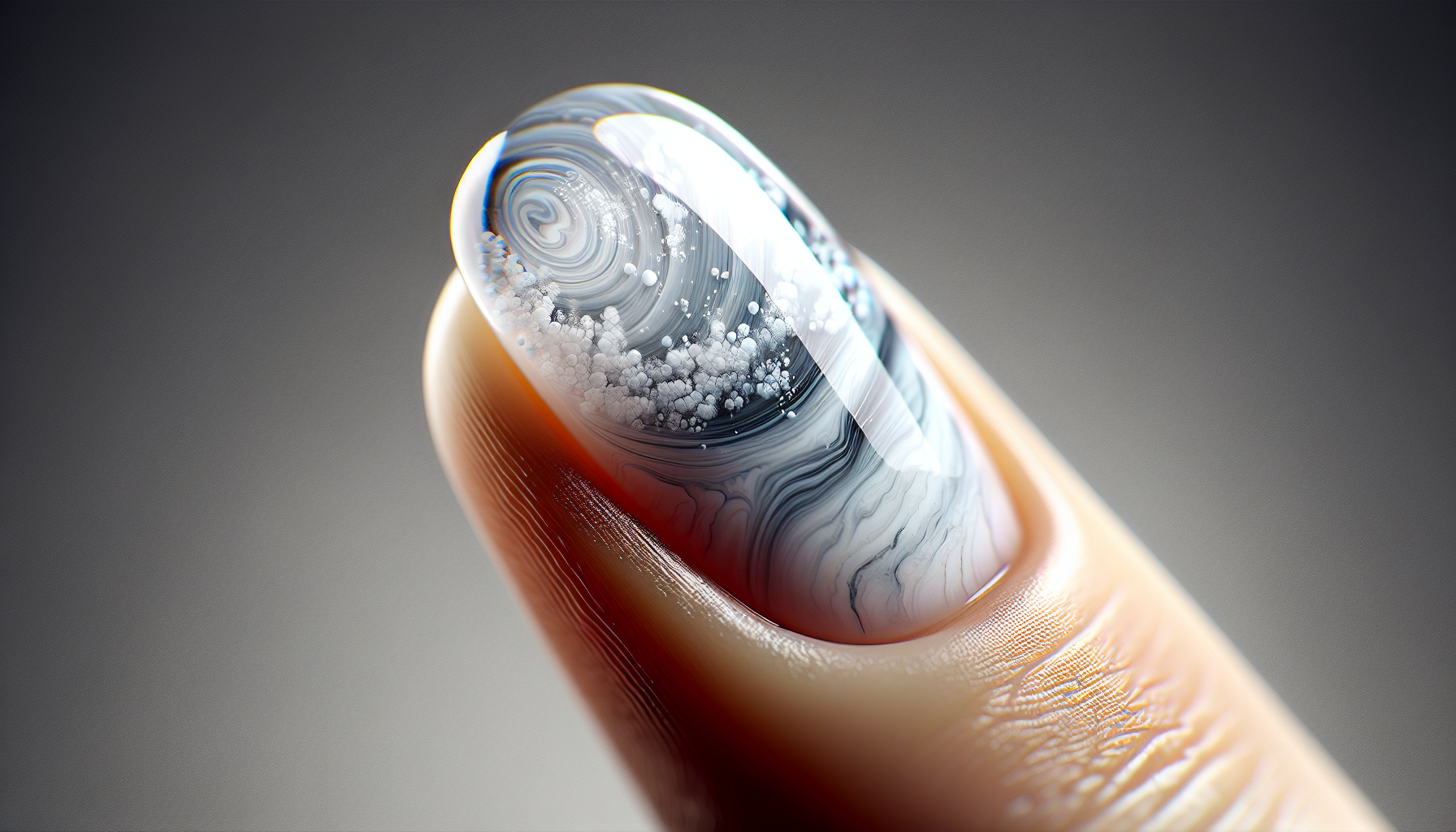
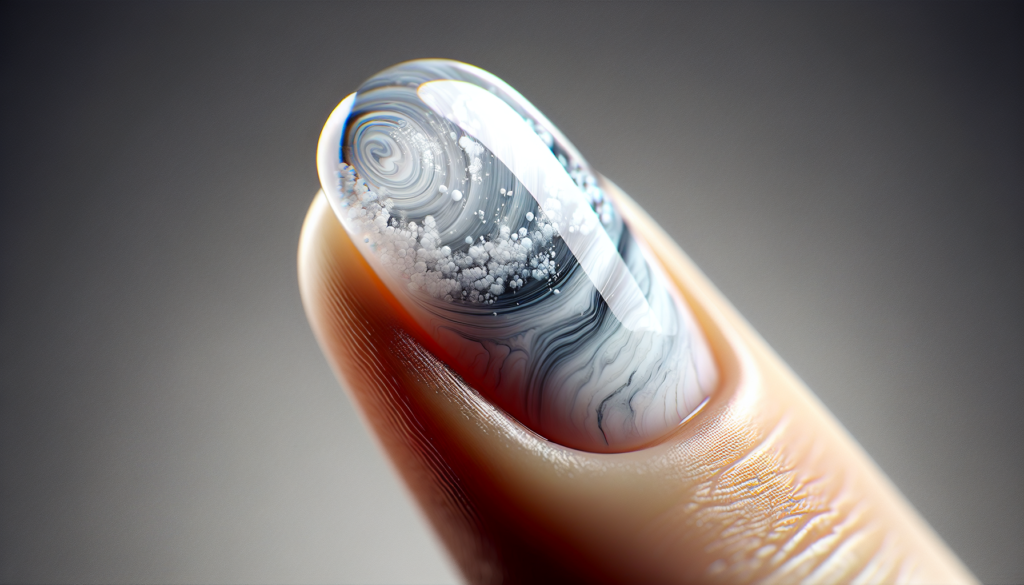
7. Glitter or textured polishes failing to spread
Glitter and heavy metallics often sink or clump instead of forming a film. This creates patchy or inconsistent marbling.
How to fix it:
- Mix textured polish with a drop of a spreading-friendly base polish to improve flow.
- Use a small amount of textured polish and build with flatter pigments around it.
- Consider applying glitter as an accent after marbling rather than within the water.
8. Skin covered in polish or difficult cleanup
Excessive mess around nails results from incorrect barrier application or poor positioning when lifting the nail. This creates extra cleanup time and risk of ruining the manicure.
How to fix it:
- Apply a liquid latex barrier or tape around nails before marbling to catch stray polish.
- Insert nails one at a time and use a steady motion to limit splashing.
- Keep cotton swabs and acetone nearby for immediate clean-up.
9. Polish film sticks to tools instead of forming rings
If your tool drags the polish or the disc clings to a stick, it may be due to tool contamination or incorrect motion.
How to fix it:
- Use clean, dry tools; even a small amount of oil or solvent changes surface interaction.
- Drag through rings gently and with a consistent motion; sudden stops can pull film.
- Replace wooden sticks frequently; they can absorb product and degrade performance.
10. Uneven or patchy edges at the cuticle
When the film doesn’t reach the cuticle properly, you get uneven edges or lost detail. This may result from imperfect nail insertion angle or film tension.
How to fix it:
- Angle the nail slightly so the cuticle area meets the film first and then roll toward the tip.
- Keep a small gap if you prefer to preserve the cuticle; otherwise, move slowly to ensure full coverage.
- Practice consistent hand positioning to reproduce success.
Troubleshooting table: fast reference
This table helps you diagnose issues quickly and pick a fix without reading every section.
| Symptom | Likely cause | Quick fixes |
|---|---|---|
| Polish beads up | Water quality, polish incompatible | Use distilled water, test different polish |
| Film collapses | Evaporation, drafts, slow work | Work faster, remove drafts, refresh film |
| Bubbles | Aeration of water, dropping technique | Pour water gently, remove bubbles before use |
| Incomplete transfer | Insufficient immersion or angle | Insert at shallow angle, roll nail, hold longer |
| Smudged top coat | Top coat incompatibility | Use thin non-lifting top coat, let dry longer |
| Muddy colors | Over-drawing, poor contrast | Reduce passes, change color combo |
| Glitter clumps | Heavy pigment or particles | Use less glitter, add flat base polish |
| Messy skin | No barrier, wrong lifting motion | Use liquid latex or tape, steady lift |
Advanced problems and solutions
If you have mastered basics but still have inconsistent results, advanced troubleshooting will help. These problems are subtler but still solvable with careful adjustments.
Evaporation-related collapse in dry climates
High evaporation rates accelerate film breakdown, especially in low-humidity environments. You will notice the film tightening or cracking within seconds.
How to fix it:
- Increase humidity around your workspace by placing a shallow pan of warm water nearby (not over your workspace) to slow evaporation.
- Work with smaller sections at a time to reduce the interval between creating the film and transferring.
- Use slightly slower-drying polishes.
Temperature shock causing film distortion
Moving from air-conditioned spaces to warmer rooms can change surface tension mid-process. You will see rings tightening or loosening unpredictably.
How to fix it:
- Keep water and polish at consistent temperature before and during the session.
- Avoid creating marbles near cooling vents or open windows that change temperature quickly.
- If transporting supplies, let them equilibrate to the workspace temperature for at least 15 minutes.
Repetition causing tool drag marks
Repeatedly drawing through the same film area can create drag marks or cause tiny tears that spoil the design.
How to fix it:
- Plan your design sequence to minimize crossings.
- Use a single, confident stroke rather than multiple short adjustments.
- Replace or clean tools between nails to prevent dried residue from catching.
Techniques to prevent common problems
Prevention reduces troubleshooting time and improves outcomes. You will find small habit changes produce consistent improvements.
- Clean bottle rims and remove thickened polish at the neck to prevent globs falling into the water.
- Keep a dedicated “marble-only” polish selection if you plan frequent sessions.
- Practice one color pair repeatedly until you can reproduce the pattern reliably.
Special materials and alternatives
Knowing how different materials behave helps you adapt. You will occasionally want to marble onto non-nail surfaces or use duochrome and specialty polishes.
Working with gel polish or cured layers
Gel polish behaves differently because it does not spread in the same way as lacquer polishes. You will need a hybrid workflow.
How to fix it:
- Use gel-specific marbling kits that allow uncured gel manipulation or perform marbling with regular polish then seal with gel top coat.
- If you attempt marbling with gel paint on waterless systems, use very thin gel paints and cure carefully between steps.
Magnetic polishes and shimmer flakes
These polishes contain pigments or particle sizes that do not suspend well on water. You will find them unpredictable.
How to fix it:
- Use them as accents rather than in main rings.
- Mix small amounts into standard marbling polishes to moderate behavior.
Aftercare and sealing
Sealing your design protects it from chips and moisture. You will prolong wear by choosing the right top coat and applying it correctly.
- Allow the marbled film to dry to the touch before applying a thin, even top coat.
- For additional longevity, use two thin top coat layers rather than one thick layer.
- Re-seal every few days if nails are exposed to water frequently to maintain gloss and durability.
Cleanup and maintenance
Efficient cleanup keeps your workspace functional and your tools performing reliably. You will reduce future issues by cleaning immediately after each session.
- Discard water after each round and clean the bowl thoroughly to avoid residual polish interference.
- Use polish remover on tools and wash with mild soap to remove solvents left in wooden sticks.
- Store polishes upright and prevent contamination by wiping rims after each use.
Safety considerations
You will be working with solvents and small tools, so prioritize ventilation and safe handling. Proper safety reduces health risks and prevents accidents.
- Work in a well-ventilated area or use a small fan to move fumes away (not across the water surface).
- Keep acetone and solvent-based removers away from open flames.
- Use gloves or skin barriers if you have sensitivities to polish solvents.
Practice routines to improve speed and consistency
Structured practice yields predictable results faster than random attempts. You will progress more quickly by focusing on repeatable drills.
- Session 1: Test 5 polishes for spread behavior and record results.
- Session 2: Create the same pattern on practice tips 10 times to perfect motion and timing.
- Session 3: Time each step to build a rhythm that prevents film collapse.
Troubleshooting checklist (quick)
When a session goes wrong, run through this checklist to isolate the problem quickly.
- Is the water distilled and at room temperature?
- Are the polishes known to spread on water?
- Is the environment draft-free and stable in temperature?
- Are tools and film fresh and free of residue?
- Did you apply a barrier around the working area?
If you answer “no” to any of these, address that variable first.
Frequently asked questions
You will likely have common operational questions as you practice. These quick answers address the most frequent concerns.
Q: How long should I wait before applying a top coat? A: Wait until the marbled film is dry to the touch, usually 3–10 minutes depending on humidity and polish. Applying too soon risks smudging.
Q: Can I use acrylic paints? A: Some acrylics will spread, but they often lack the sheen of polish and can crack. Use thin acrylic inks tested for marbling or stick to nail polishes for consistent results.
Q: Why do my colors change after drying? A: Some polishes shift finish as they cure. Metallics and duochromes may appear different once solvent evaporates. Test colors first to understand behavior.
Final tips for consistent success
Small routines and attention to detail will deliver the most reliable results. You will reduce frustration by practicing under the same conditions and using a consistent set of polishes.
- Keep a marbling log to note which polishes, temperatures, and water types worked best.
- Limit variables: change only one factor at a time when troubleshooting.
- Work methodically—preparation and a calm approach matter as much as raw technique.
Conclusion
You will avoid most water marbling frustrations by understanding the variables that influence film formation, polish behavior, and transfer mechanics. Use distilled water, choose spreading-friendly polishes, minimize drafts and evaporation, and practice consistent insertion and lifting techniques.
If you follow the fixes and preventative tips in this guide, you will be able to troubleshoot issues quickly and produce repeatable, high-quality marbled designs. Keep a testing mindset, refine your process, and treat setbacks as data you can learn from to improve your next session.