?Are you confident that the paint marker design on your glass will hold up, look professional, and resist smudging or fading?
Top 5 Mistakes To Avoid When Using Paint Markers On Glass
This article guides you through the most common errors people make when using paint markers on glass and shows how to prevent them. You will learn the right materials, preparation steps, application techniques, curing and sealing methods, and maintenance practices to produce long-lasting, attractive results.
Why focus on glass-specific techniques?
Glass behaves differently from porous surfaces such as paper or wood. Because it is nonporous, adhesion, curing, and durability depend more on chemistry and surface preparation than on simple application. You will save time and money by learning these distinctions up front, and you will reduce the risk of cracked, flaking, or easily wiped-away designs.
Quick overview of the Top 5 mistakes
You will frequently encounter these five errors:
- Using the wrong marker or paint chemistry for glass.
- Skipping thorough surface cleaning and prep.
- Applying layers too thickly or unevenly.
- Failing to cure and seal properly.
- Ignoring environmental and handling factors (temperature, humidity, cleaning).
Each section below breaks these mistakes down, explains why they happen, and gives practical, step-by-step solutions, troubleshooting guidance, and pro tips.
Mistake 1: Using the Wrong Type of Marker for Glass
Choosing an inappropriate marker is one of the fastest ways to guarantee poor adhesion, fading, or smudging. Not all paint markers are formulated for nonporous surfaces, and some will never fully adhere to glass no matter how carefully you apply them.
What this looks like
You will see quick issues like ink pooling, smudging when dry to the touch, poor color vibrancy, or the design peeling off after a short period. Markers that are water-based, chalk-based, or meant for paper often fail on glass.
Why it happens
Markers designed for porous substrates rely on absorption; without porous fibers to accept the pigment and binder, they sit on the surface and remain vulnerable. Solvent-based or enamel-based markers create stronger bonds with glass, while some specially formulated glass markers use adhesion promoters.
How to avoid it
- Choose markers explicitly labeled for glass or nonporous surfaces.
- Prefer oil-based, enamel, or epoxy-based paint markers for durability.
- If you need temporary designs, select nonpermanent glass markers with erasable formulas.
Marker types: quick comparison
| Marker Type | Adhesion to Glass | Durability | Common Uses | Notes |
|---|---|---|---|---|
| Oil-based paint markers | High | High | Permanent signs, art, outdoor glass | Long drying; may require solvent cleanup |
| Enamel markers | High | High | Decorative glass, labelling | Good hardness after cure |
| Acrylic paint markers | Medium | Medium | Indoor decorative work | May need sealer for durability |
| Alcohol-based markers | Low-Medium | Low | Temporary markings | May be smudged by solvents |
| Chalk/Window markers (water-based) | Low | Low (erasable) | Temporary signage, menus | Ideal when removability is required |
| Epoxy/ceramic markers | High | Very high | Functional glassware, permanent decoration | May require oven curing |
Recommended practice
- Read manufacturer specifications for adhesion to glass.
- Test the marker on similar glass and perform adhesion and wash tests before committing to a large project.
- Use permanent markers for items subject to cleaning, handling, or outdoor conditions.
Troubleshooting
If a marker you used is smudging:
- Let it cure longer and test again — some solvents continue to evaporate.
- Try a compatible sealer to lock in surface film.
- If it continues to fail, switch to an enamel or solvent-based product designed for glass.
Mistake 2: Skipping Thorough Surface Cleaning and Prep
Even the best marker cannot perform on a contaminated surface. Oils, fingerprints, dust, or residue from stickers will prevent proper adhesion and lead to early failure.
What this looks like
Your design may lift at the edges, flake off after washing, or show inconsistent opacity and texture. You might see small areas where the paint beads up rather than forming a continuous film.
Why it happens
Contaminants act as a barrier between the glass and the paint binder. Because glass is nonporous, any residual film prevents chemical bonding or mechanical adhesion, causing weak points in the applied paint.
How to avoid it: step-by-step surface prep
- Inspect the glass for grease, dust, adhesive residue, or scratches.
- Wash the surface with warm water and a mild detergent to remove grease.
- Rinse thoroughly and dry with a lint-free cloth.
- Wipe the area with isopropyl alcohol (70–99%) or denatured alcohol on a clean microfiber cloth to remove any remaining oils or detergent films.
- For heavy adhesive residue, use a solvent such as acetone or Goo Gone, then follow with an alcohol wipe.
- Allow the glass to dry completely; avoid touching the cleaned surface with bare fingers.
When to sand or etch
- For permanent installations where extreme durability is necessary (e.g., glassware that will be repeatedly washed), light etching or using an adhesion promoter can improve mechanical grip.
- Avoid aggressive abrasion on decorative glass that you want to remain smooth unless that finish is acceptable.
Tools and materials checklist
- Lint-free microfiber cloths
- Mild dish soap and warm water
- Isopropyl alcohol (70–99%)
- Acetone or adhesive remover (optional)
- Rubber gloves to avoid transferring oils
- Masking tape (for creating clean edges and protecting adjacent areas)
Troubleshooting
If paint beads up after cleaning:
- Re-clean the area with alcohol and allow complete evaporation.
- Ensure you are not applying paint to a surface that still has conditioner coatings (some glass cleaners leave films).
- Test on the cleaned area again. If beading persists, consider a marker with better wetting properties or slightly roughen the surface in the application area.
Mistake 3: Applying Layers Too Thickly or Unevenly
Overapplying paint or building up thick layers often causes cracking, uneven curing, and poor adhesion. You need controlled application to achieve consistent results.
What this looks like
You will notice sagging drips, wrinkles, cracking as the thicker layer dries, or adhesive failure where thicker paint lifts from the glass. Thick layers can also make colors darker or less vibrant than expected.
Why it happens
Thick layers trap solvents within the paint film; as solvents escape unevenly, the surface dries sooner than the interior, causing internal stresses and cracking. Additionally, heavy layers may not bond uniformly to the smooth glass surface.
How to avoid it
- Apply several thin coats, allowing recommended dry time between layers.
- Pump or shake markers as instructed to ensure proper pigment flow; do not force excessive amounts at once.
- Use light, even strokes and maintain consistent pressure.
- For large areas, consider using a brush-on paint formulated for glass that can be controlled more easily, then finish details with markers.
Recommended application technique
- Shake or agitate the marker according to manufacturer instructions.
- Test on scrap glass to calibrate tip flow and opacity.
- Apply the first thin coat with a steady hand; let it dry completely.
- Apply a second thin coat for coverage; repeat until you reach the desired opacity.
- Allow full cure time before handling or sealing.
Layering guide
| Number of Coats | Typical Dry Time Between Coats | Typical Result |
|---|---|---|
| 1 thin coat | 10–30 minutes | Slight translucency, can be buildable |
| 2 thin coats | 20–60 minutes | Good coverage, less risk of cracking |
| 3+ thin coats | 30–90 minutes between coats | Full opacity but longer total cure time; use sparingly |
Note: Times depend on marker chemistry and ambient conditions.
Troubleshooting
If cracks appear after application:
- Remove the failing layer with a suitable solvent and re-apply using thinner coats.
- For small defects, sand very lightly with fine-grit paper, clean, and spot-fill with a thin coat.
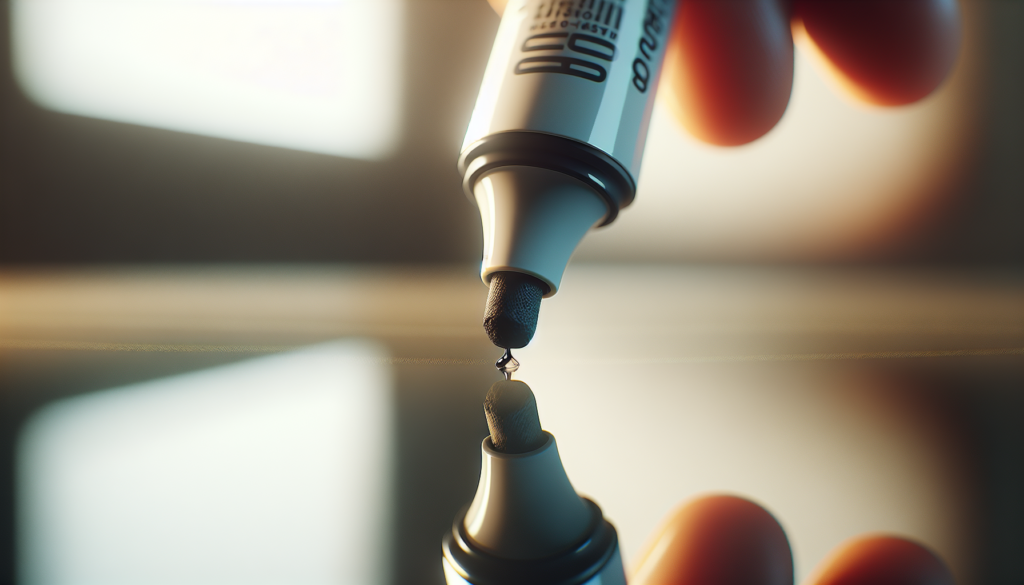
Mistake 4: Failing to Cure and Seal Properly
Curing and sealing are separate steps from drying to touch. Improper curing or skipping sealants can leave your design vulnerable to abrasion and solvents.
What this looks like
After what feels like sufficient drying, your design washes away in the sink, scuffs with routine handling, or fades after exposure to sunlight or heat.
Why it happens
Some paints develop final properties only after prolonged curing or after being baked/chemically cured. Sealing adds a protective layer that resists abrasion, moisture, and UV light. Without it, even permanent markers may be easily scratched or washed.
How to avoid it
- Follow the marker manufacturer’s cure recommendations exactly (air cure vs. oven cure).
- Use an appropriate sealer when needed:
- Clear acrylic spray sealer for indoor, decorative items.
- Clear enamel spray or brush-on sealer for higher abrasion resistance.
- Heat-curing (baking) for markers explicitly designed for oven curing.
- When sealing glassware intended for food use, choose food-safe sealers or select markers that are inherently food-safe once cured.
Curing methods and when to use them
| Curing Method | When to Use | Typical Steps | Pros | Cons |
|---|---|---|---|---|
| Air cure (room temp) | Most indoor decorative work | Allow 24–72 hours or longer | No heat exposure | Slower, may be less durable |
| Oven cure | Markers labeled oven-safe | Bake at recommended temp/time on a clean baking sheet | Stronger bond, more durable | Risk of glass thermal shock if heated incorrectly |
| UV cure | Some specialized inks | Expose to UV light for specified time | Fast, high durability | Requires specialized equipment/inks |
| Sealant coating | For added abrasion/matte/gloss control | Apply compatible clear coat | Flexible options for protection | Potential alteration of appearance |
Sealing tips
- Match your sealer chemistry to the paint marker chemistry (e.g., solvent-based sealer over solvent-based paint).
- Test compatibility on scrap glass to check for clouding, blooming, or color shift.
- Apply sealant in thin, even coats, allowing full cure between coats.
Troubleshooting
If a sealer causes clouding:
- Confirm chemical compatibility; some acrylic sealers react with solvent-borne paints.
- Use a different sealer or a water-based, low-VOC option designed for clear surfaces.
- Remove affected sealer (if possible) and re-seal after full drying.
Mistake 5: Ignoring Environmental and Handling Factors
Temperature, humidity, handling during curing, and cleaning methods all affect longevity. You need to consider real-world conditions to ensure your work remains intact.
What this looks like
Your work might flake after a hot day in the sun, streak when exposed to humidity, or fade after routine washing. Improper storage of markers can also cause clogs and inconsistent flow.
Why it happens
Paint chemistry and curing processes are sensitive to environmental conditions. High humidity can slow solvent evaporation or cause blooming; low temperatures can inhibit binder crosslinking. Aggressive cleaning agents and high heat can break down cured films.
How to avoid it
- Work in a well-ventilated area with stable temperature and humidity.
- Follow marker storage recommendations—store horizontally or tip-down per manufacturer guidance to avoid drying or leakage.
- Avoid applying paint in direct sunlight or extreme cold.
- When cleaning decorated glass, use mild detergents and soft cloths; avoid abrasive scrubbing or solvents unless the paint is rated for that exposure.
Handling and post-application care
- Wait full cure time before handling.
- If the item will be used frequently (e.g., glassware), hand wash with mild soap rather than dishwasher unless the product explicitly states dishwasher safety.
- For outdoor pieces, select UV-resistant markers or add UV-protective sealer.
Storage and marker longevity
- Keep caps tightly sealed to prevent drying.
- Store in a cool, dry place out of direct sunlight.
- Periodically shake and test markers to maintain flow; follow manufacturer reactivation instructions if available.
Troubleshooting
If paint fades quickly after sun exposure:
- Use UV-resistant pigments or add a UV-blocking clear coat.
- Consider moving the piece to a less-exposed location or use laminated glass covers.
Additional practical sections
Preparing a project: step-by-step checklist
Before you begin, follow this practical list to avoid the most common failures:
- Select the right marker type for your intended use (permanent, temporary, heat-resistant, food-safe).
- Gather cleaning supplies: detergent, alcohol wipes, lint-free cloths.
- Clean and dry the glass thoroughly.
- Mask off areas with quality painter’s tape for crisp edges.
- Prime edges or roughen slightly if extreme durability is needed.
- Apply thin coats, allowing proper drying between layers.
- Cure as directed (air or oven cure).
- Apply appropriate sealer if needed; test first.
- Allow full cure before handling and follow care instructions.
Common scenarios and recommended approaches
| Scenario | Recommended Marker Type | Curing/Sealing Advice |
|---|---|---|
| Window signage (temporary) | Water-based chalk/window markers | No sealer; cleanable with water |
| Decorative indoor vase | Acrylic or enamel marker | Air cure + acrylic sealer for longevity |
| Hand-painted drinking glasses | Oven-safe ceramic/epoxy markers labeled food-safe | Oven cure as instructed; verify food safety |
| Outdoor glass sign | Outdoor-rated enamel or oil-based markers | UV-resistant sealer; secure mounting |
| Laboratory or workshop glass | Permanent solvent-based markers | No sealer required, but check chemical compatibility |
Safety and ventilation
- Use solvent-based markers in a well-ventilated area to avoid inhaling fumes.
- Wear gloves to prevent skin contact and avoid fingerprints on cleaned glass.
- Follow local disposal regulations for used marker tips, solvent-soaked rags, and empty containers.
Troubleshooting table: common problems and fixes
| Problem | Likely Cause | Quick Fix |
|---|---|---|
| Smudging after touch-dry | Paint not fully cured / wrong marker type | Allow full cure, switch to appropriate marker |
| Paint peeling off | Contaminated surface / insufficient adhesion | Re-clean, use adhesion promoter or proper marker |
| Cracking or bubbling | Too thick layers / trapped solvents | Remove and reapply in thin coats |
| Color fade | UV exposure / poor pigment | Use UV-resistant paint or sealer |
| Cloudy sealer finish | Chemical incompatibility | Test different sealer or use manufacturer-recommended product |
| Marker tip clogging | Evaporation due to poor storage | Rehydrate per instructions or replace tip/marker |
Tools and materials recommended
- Markers: enamel, oil-based, or oven-cure glass markers depending on project
- Cleaning: mild detergent, isopropyl alcohol, acetone (optional)
- Application: painter’s tape, stencils, masking film, fine brushes for blending
- Protective: nitrile gloves, respirator (for solvent-heavy work), safety glasses
- Finishing: compatible clear coats (acrylic, enamel), UV-protective sprays
Best practices for long-term maintenance
- When possible, hand wash decorated glass items with mild detergent and soft cloths.
- Avoid abrasive cleaning pads and scouring powders.
- Store items away from direct sunlight to minimize UV-induced fading.
- For frequently handled items, plan for touch-up by keeping a small supply of the original marker or compatible color.
Final tips and pro advice
- Test everything first: marker, cleaning process, sealer, and cure on a scrap piece of the same glass type.
- Document your process: note marker brand, lot, drying/cure times, and sealer used so you can replicate successful results.
- For commercial or commissioned work, disclose care instructions to the client to manage expectations regarding durability and cleaning.
- If you need washable but temporary signage, use water-based window markers and provide a care guide for removal.
- Consider professional firing or ceramic glazing for glassware requiring dishwasher safety and food contact certification.
Summary
You can avoid common failures by selecting the right marker chemistry for glass, preparing the surface thoroughly, applying thin, even layers, curing and sealing as recommended, and managing environmental and handling factors. Testing and documenting your methods will help you achieve consistent, durable results with paint markers on glass.
If you follow the guidance above, you will reduce wasted materials, avoid frustration, and produce glass designs that remain durable and attractive over time.